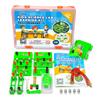
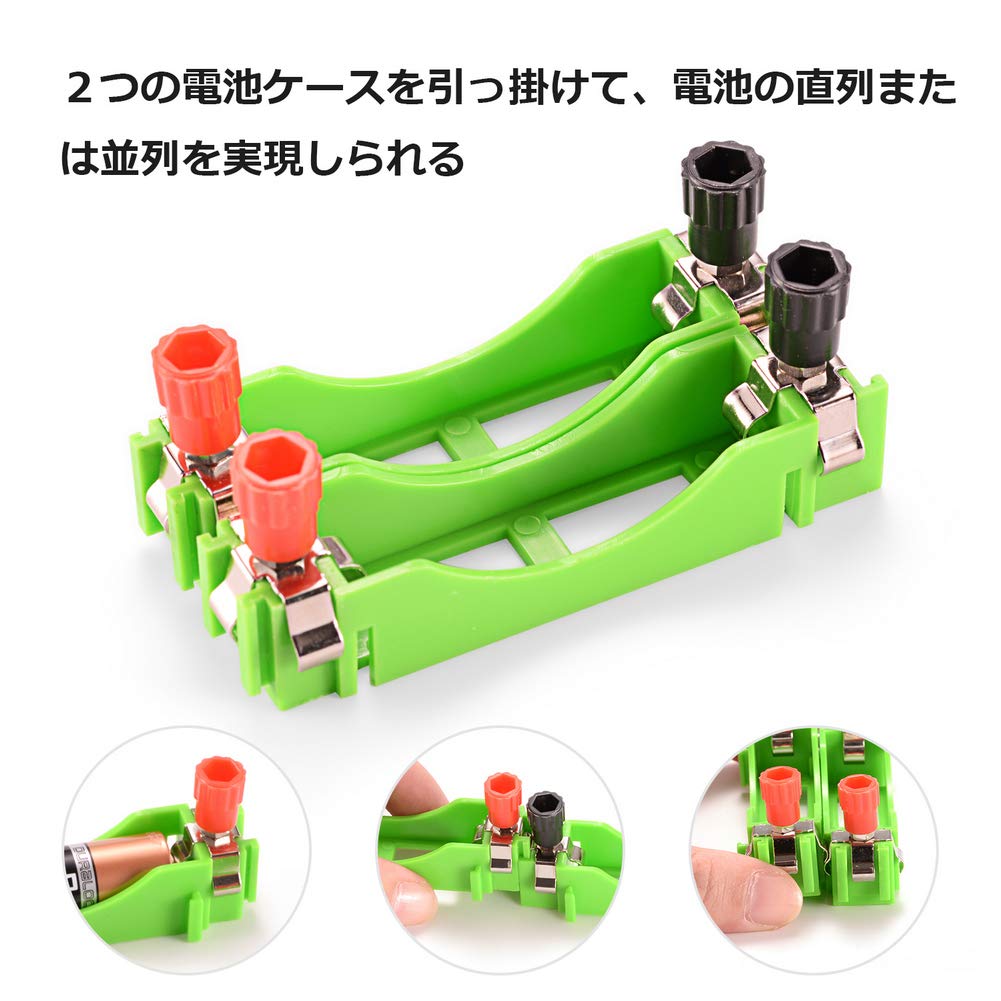
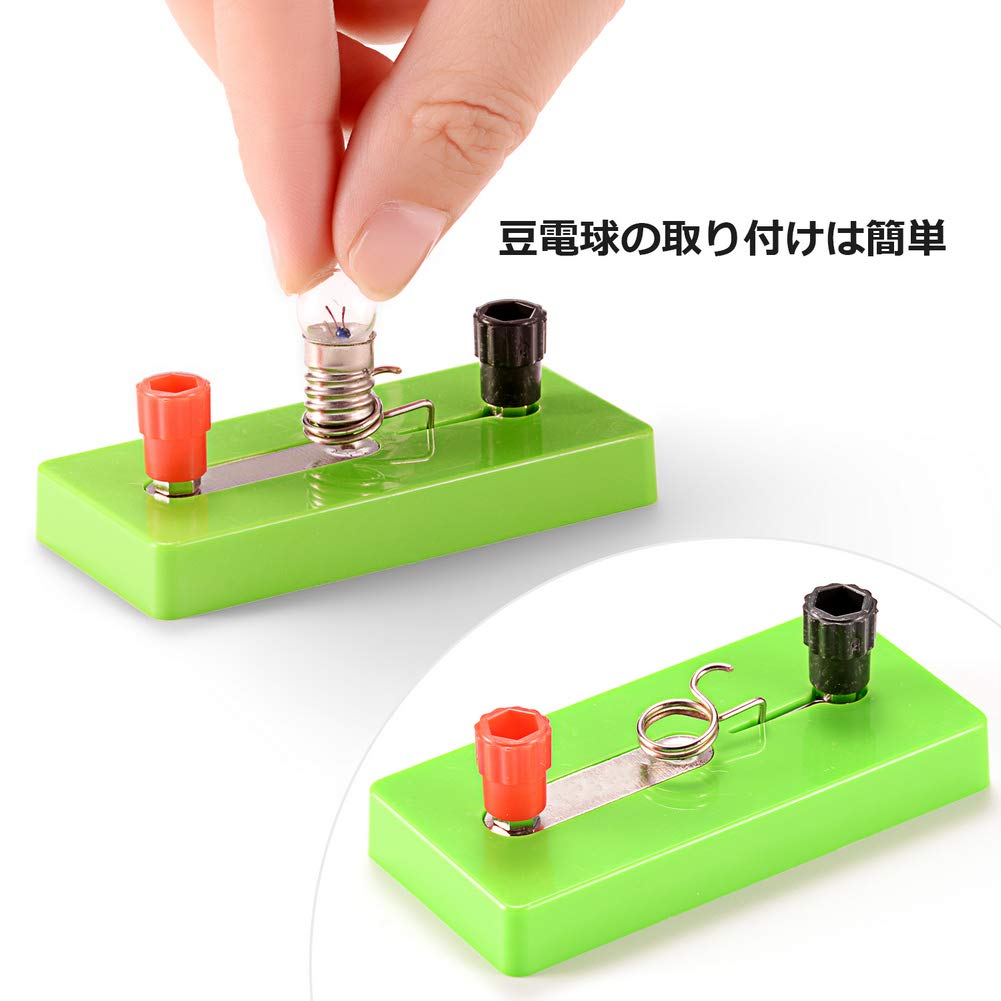
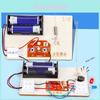
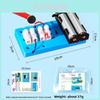
Kit contents: 2 battery boxes, 1 switch, 2 miniature light bulb sockets, 8 vinyl conductors (6 U-shaped, 2 clip-on), 5 miniature light bulbs (3 2.5V, 2 3.8V), 2 heating wires (1 thin, 1 thick), 1 wrench, 1 Japanese guide, 1 clear storage box (batteries sold separately).
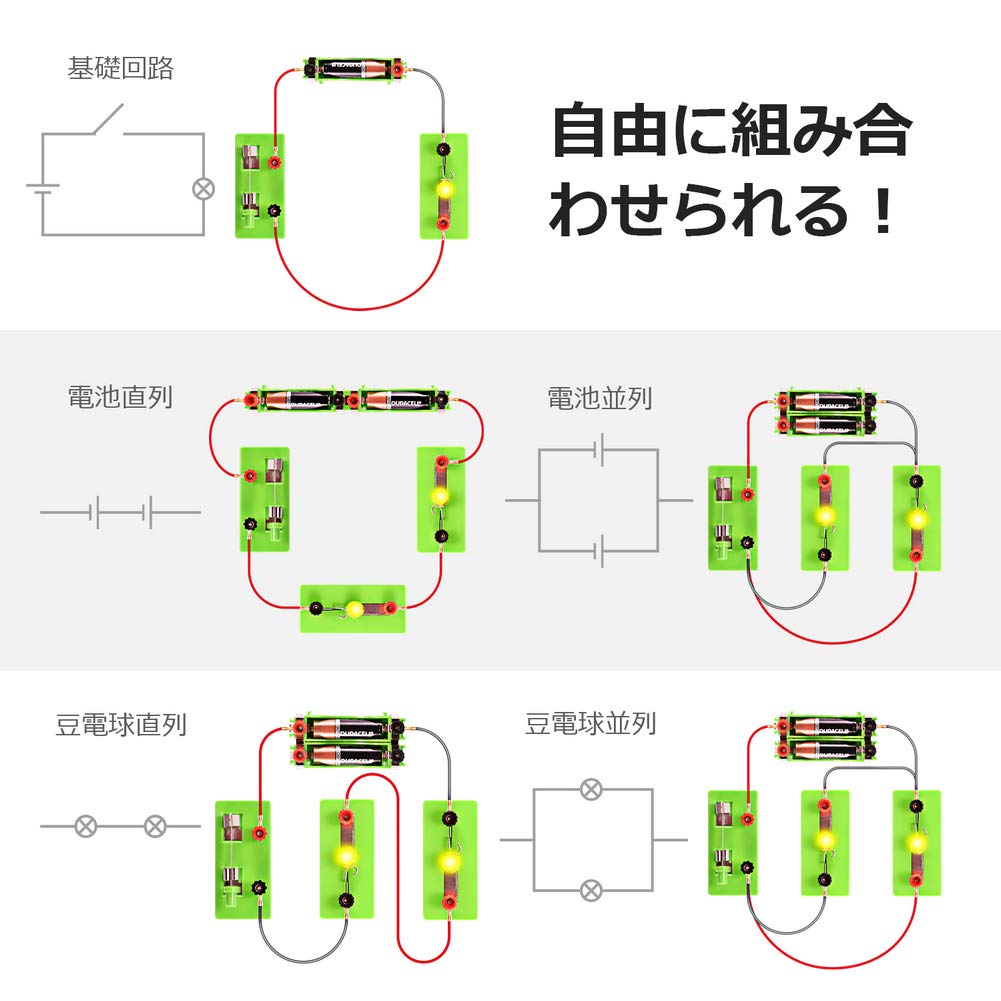
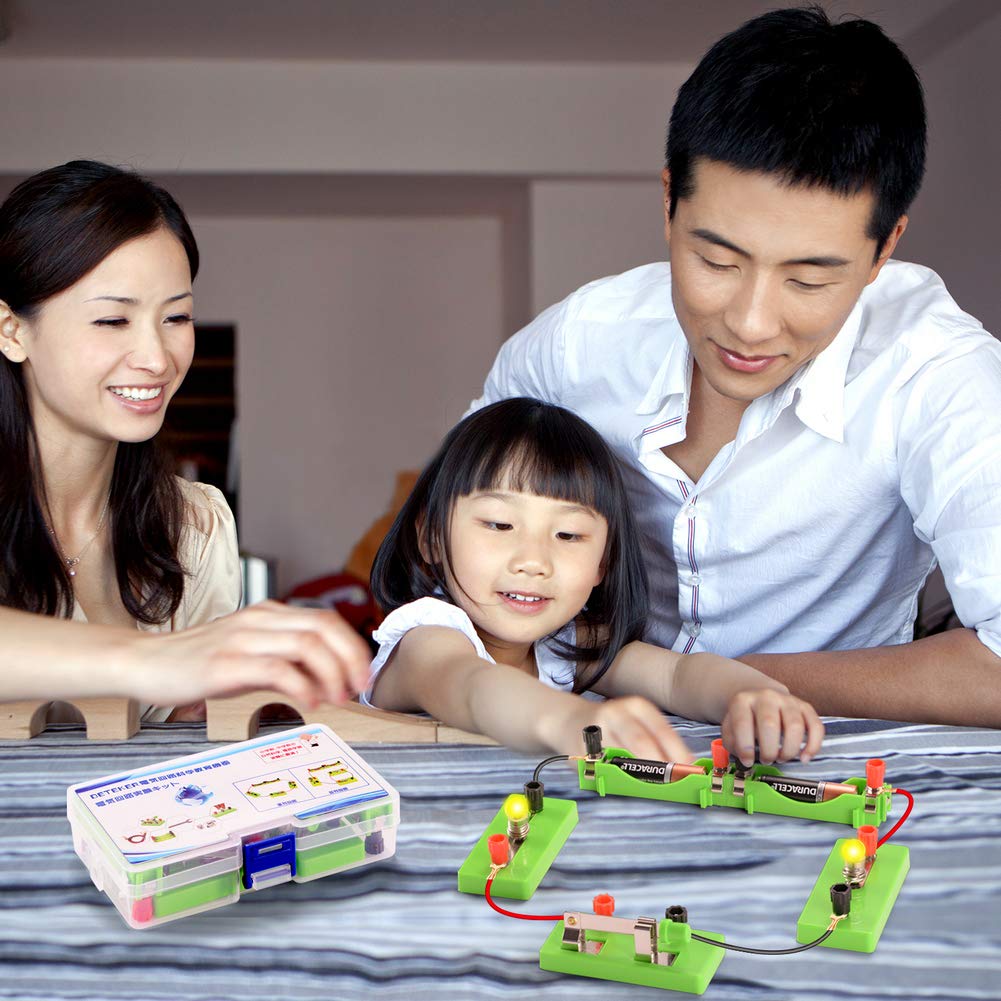
This science education equipment kit allows you to create and experiment with basic electrical circuits, such as series connections (series circuits) and parallel connections (parallel circuits). It allows elementary and junior high school students to easily recreate science and electrical experiments at home. Even children can assemble it themselves and learn about electrical circuits while playing. It's perfect for science-loving children and elementary and junior high school students for electrical and electronic circuit experiments. It's also recommended as a science education tool for training institutions and schools.
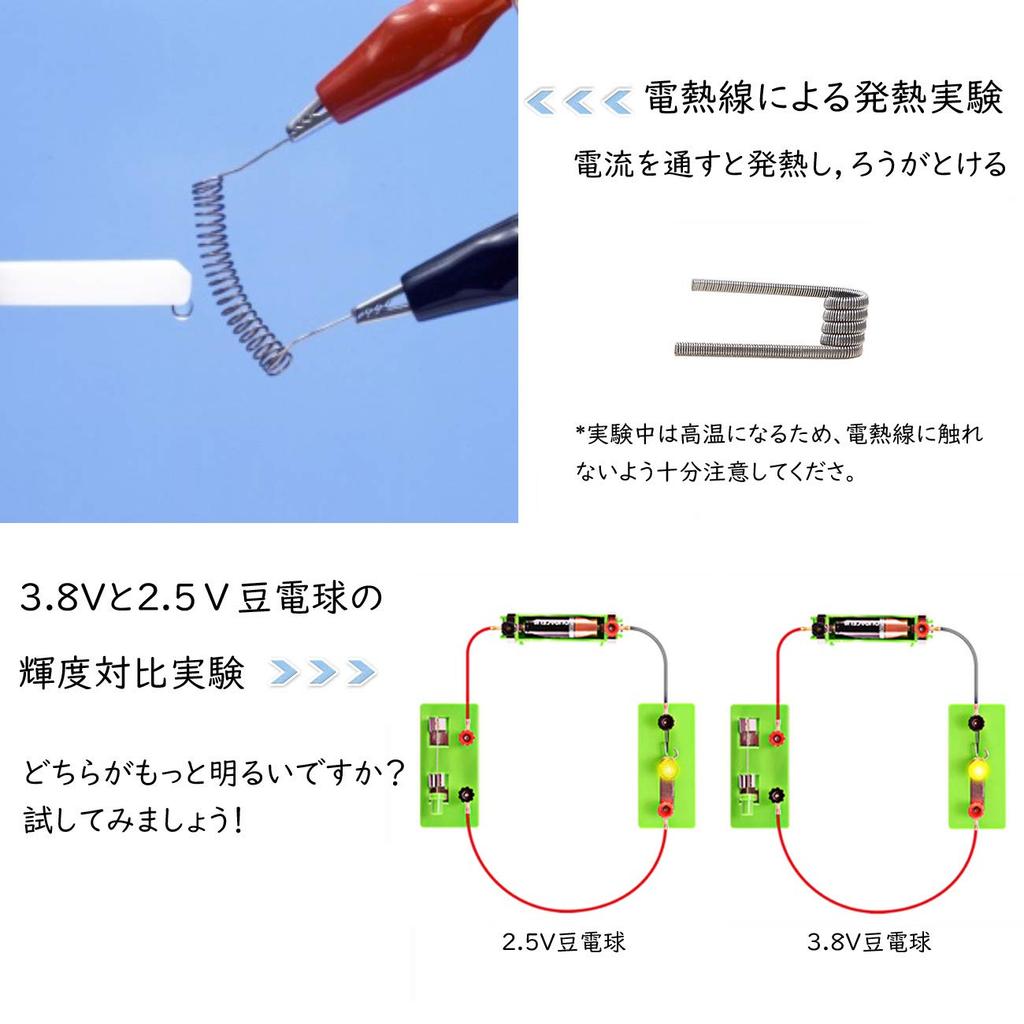
Use the heating wire to conduct experiments on "heat generation by electricity." 🌺 Two miniature light bulbs, 2.5V and 3.8V, are included, allowing you to conduct experiments on "light bulb brightness." 🌺 Use clip-on wires to conduct experiments on "good and poor electrical conductors." 🌺 With a generous number of miniature light bulbs, you can disassemble them and examine their internal structure to better understand how they light up. 🌺 If you buy two sets, you can create more complex electrical circuits.
See, touch, and learn right in front of your eyes! Children can assemble it without adult help and try out the miniature light bulb experiments they learned at school at home until they are satisfied. By understanding how electricity works, children can acquire basic knowledge about how to handle and interact with electricity while correctly understanding its dangers and benefits.
You can recreate electrical experiments. Learn about electrical circuits while having fun playing with how electrical and electronic circuits work. It's also useful for independent electrical research. It's also a great gift for elementary and junior high school students who love science research. Your child will love it. >>>>>>>If the power won't turn on, first check the electrical circuit connections properly. If the circuit is properly connected but the power still won't turn on, try switching the "+" and "-" terminals on the light bulb socket. Also, make sure the battery is fully charged. If you've checked all of the above and the power still won't turn on, please contact our customer service. We offer a replacement or refund at your request.
If the power won't turn on, first check the electrical connections. If the power is still not turning on even after the electrical connections are properly made, try switching the "+" and "-" terminals on the light bulb socket. Also, make sure the battery is fully charged. If you've checked all of the above and the power still won't turn on, please contact our customer service. We'll provide a replacement or refund if you prefer.




 No-delivery refund



![RiZKiZ Circuit Puzzle Electronic Circuit with Japanese Electronic No Soldering Introductory Block [188 Experiments] Illustrations, Guide, Kit,](https://img.joomcdn.net/8d70b14e3b83620b3112e4af055895e4fe153557_100_100.jpeg)