Worth knowing:
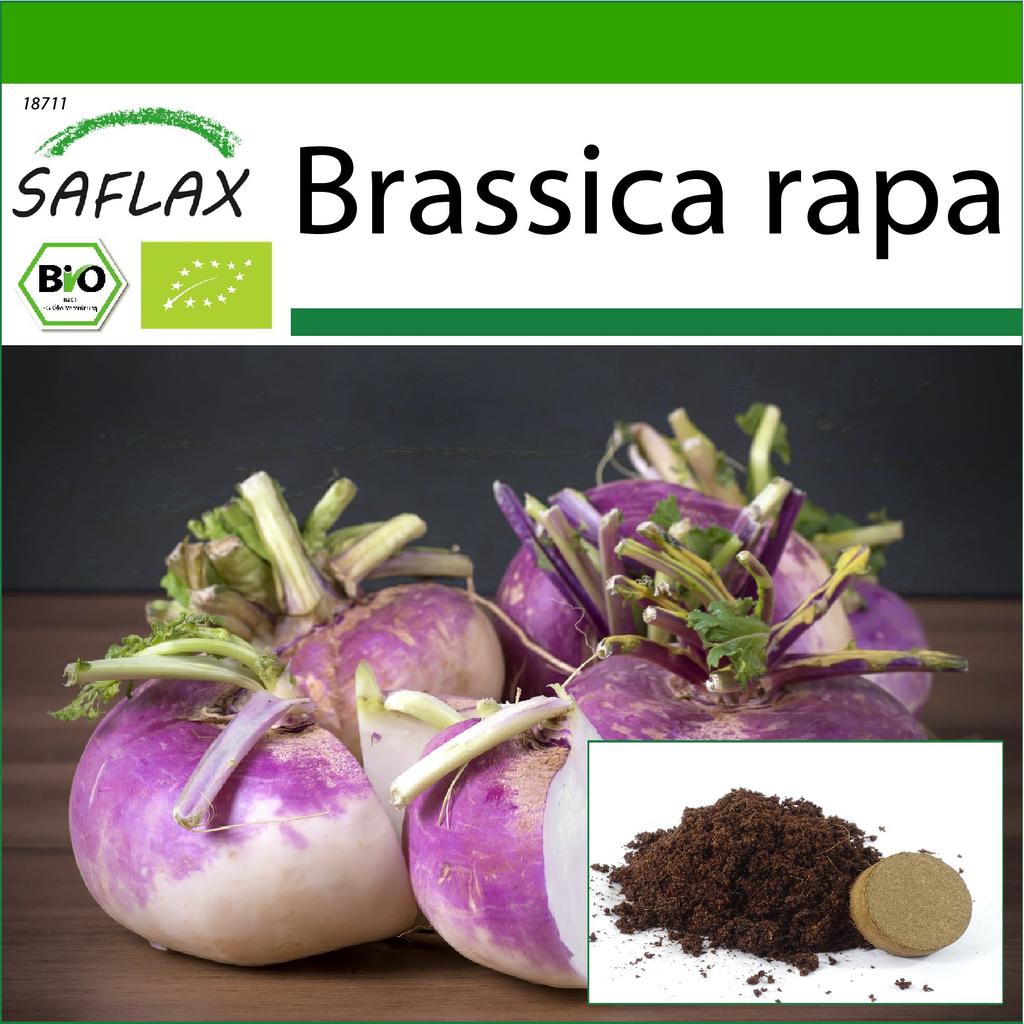
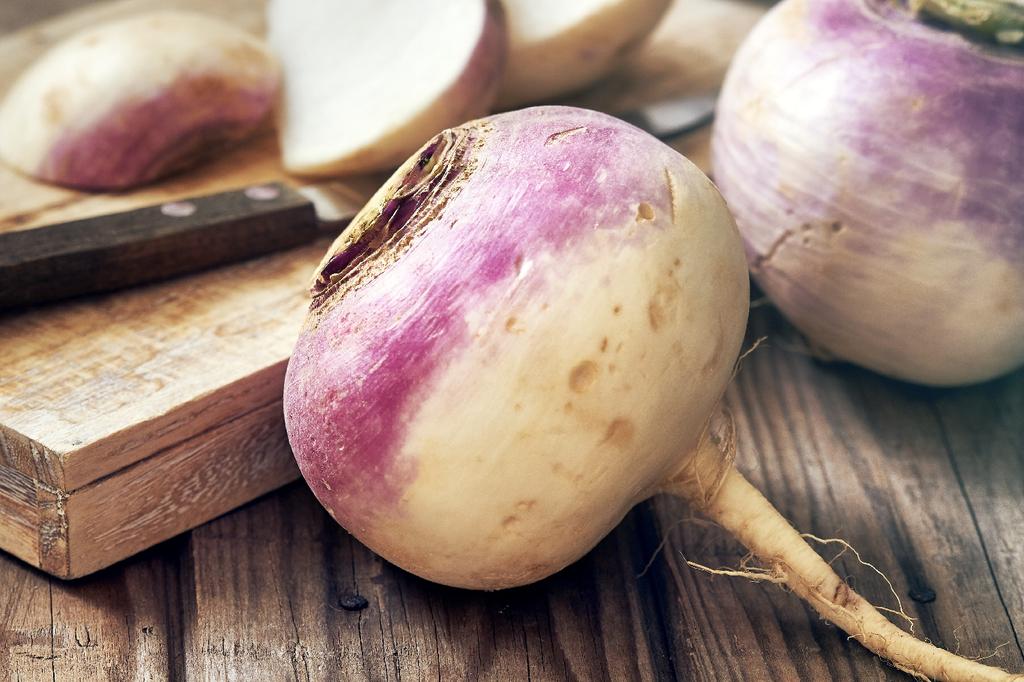
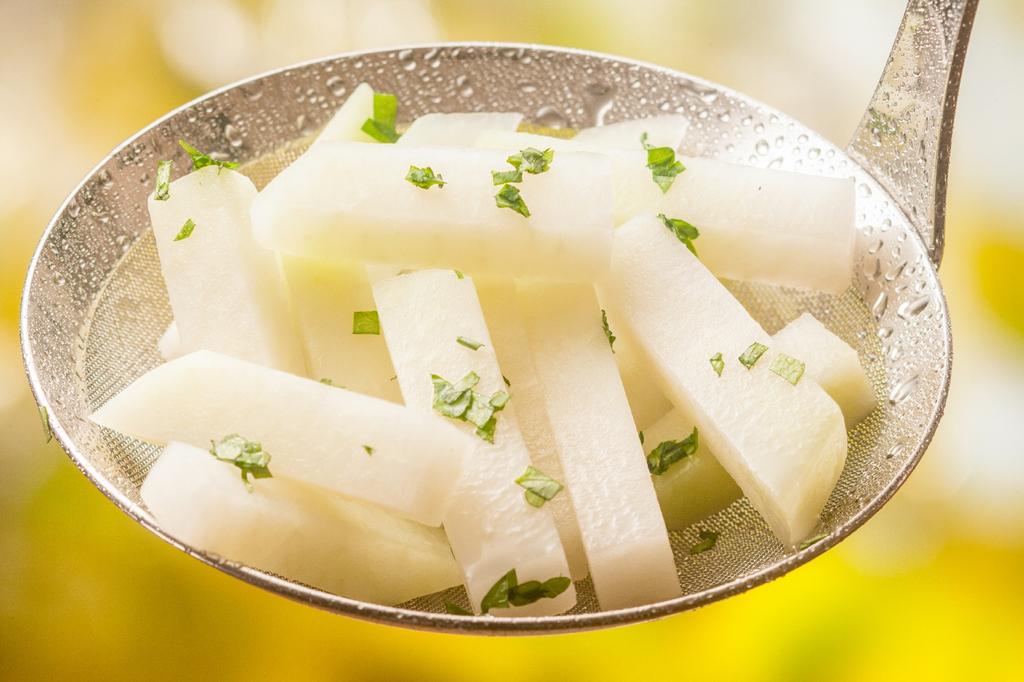
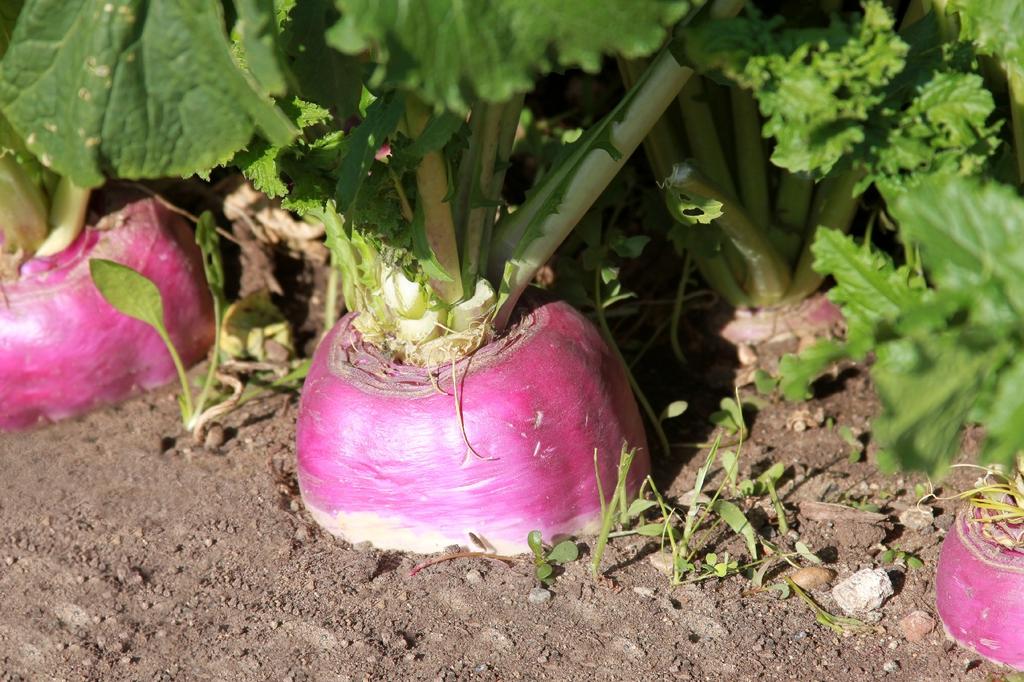
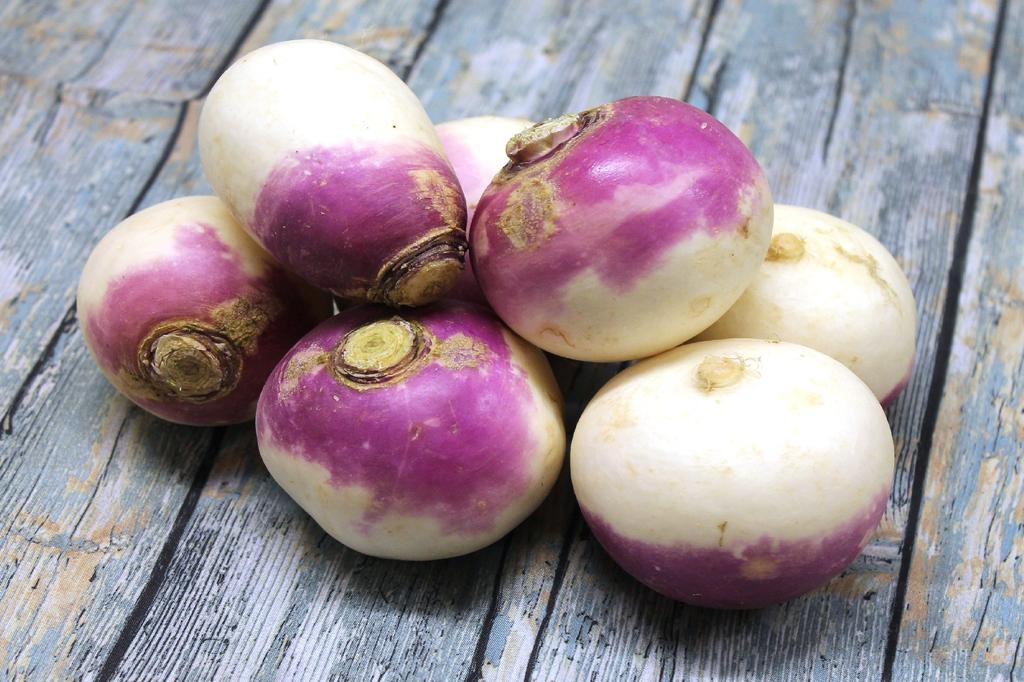
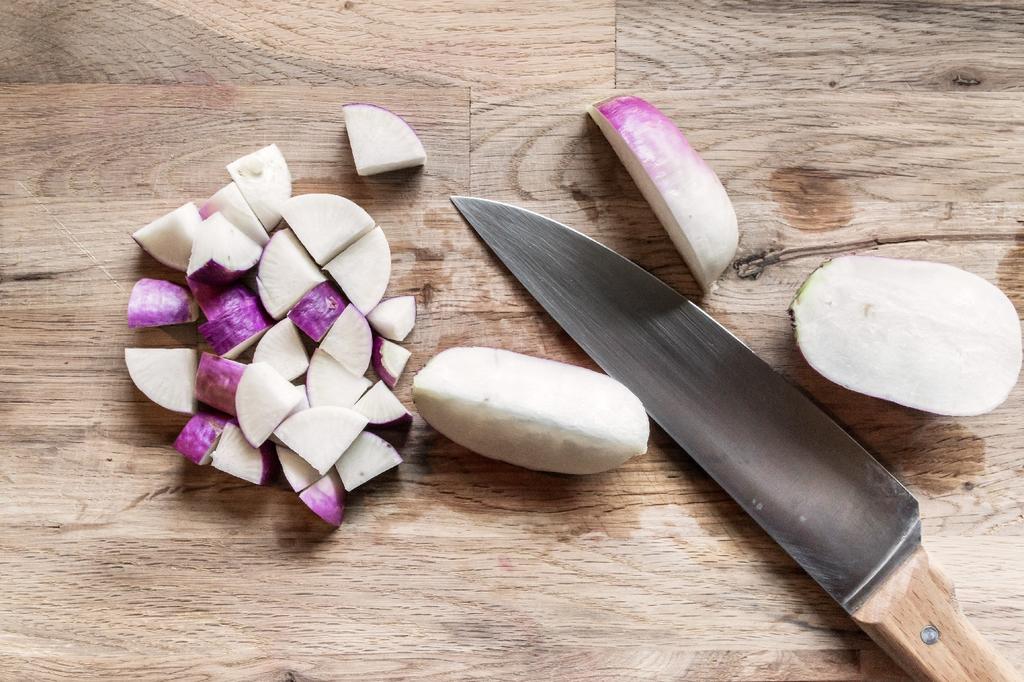
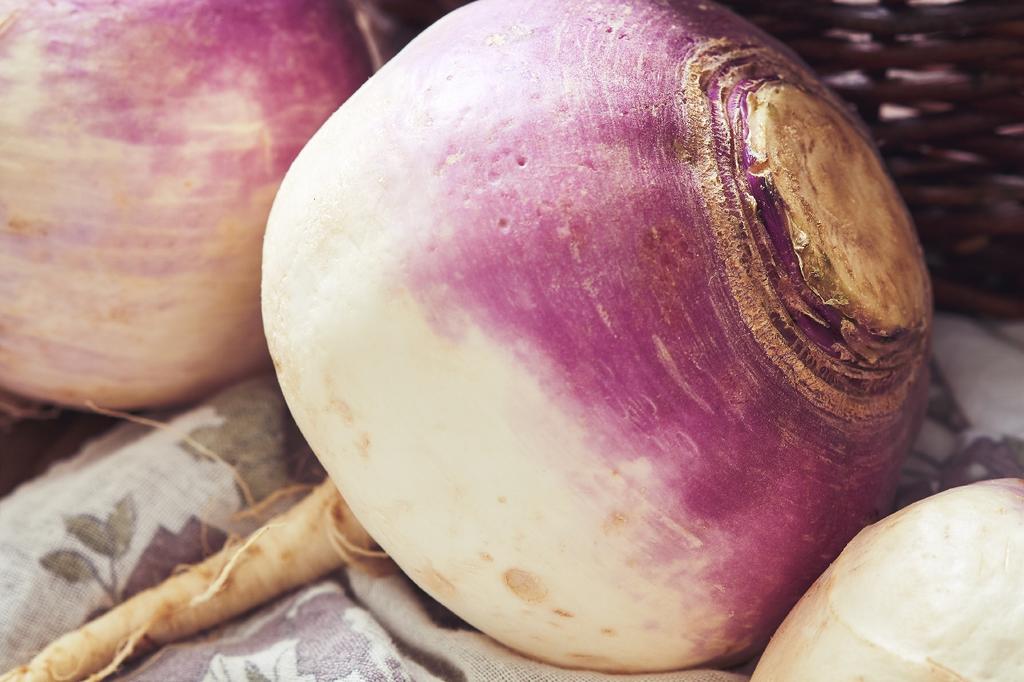
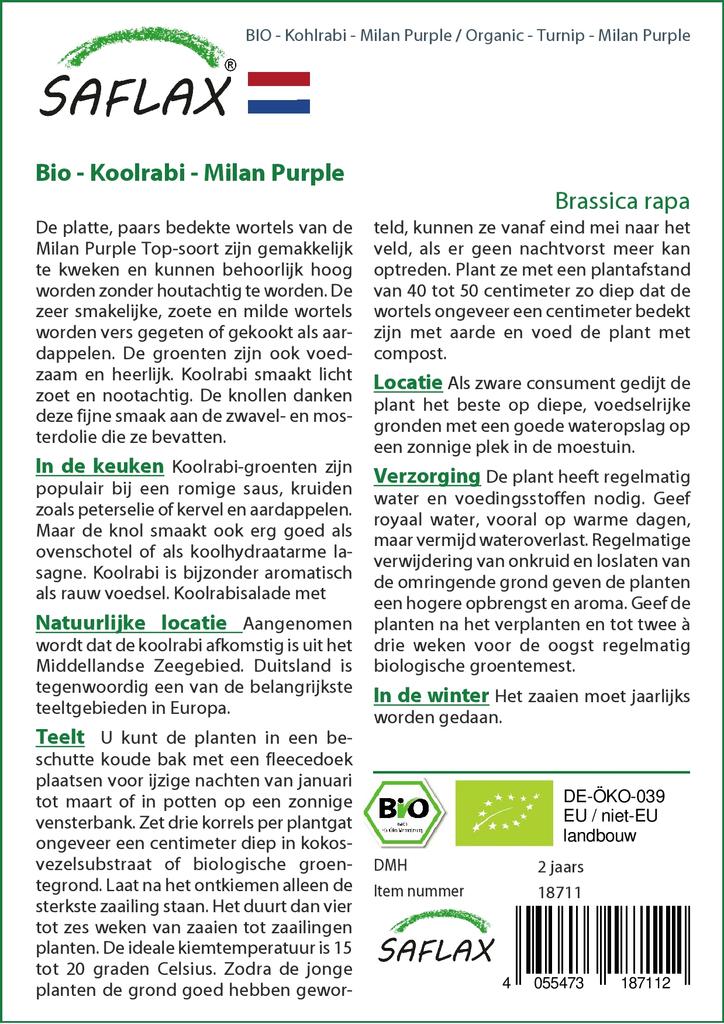
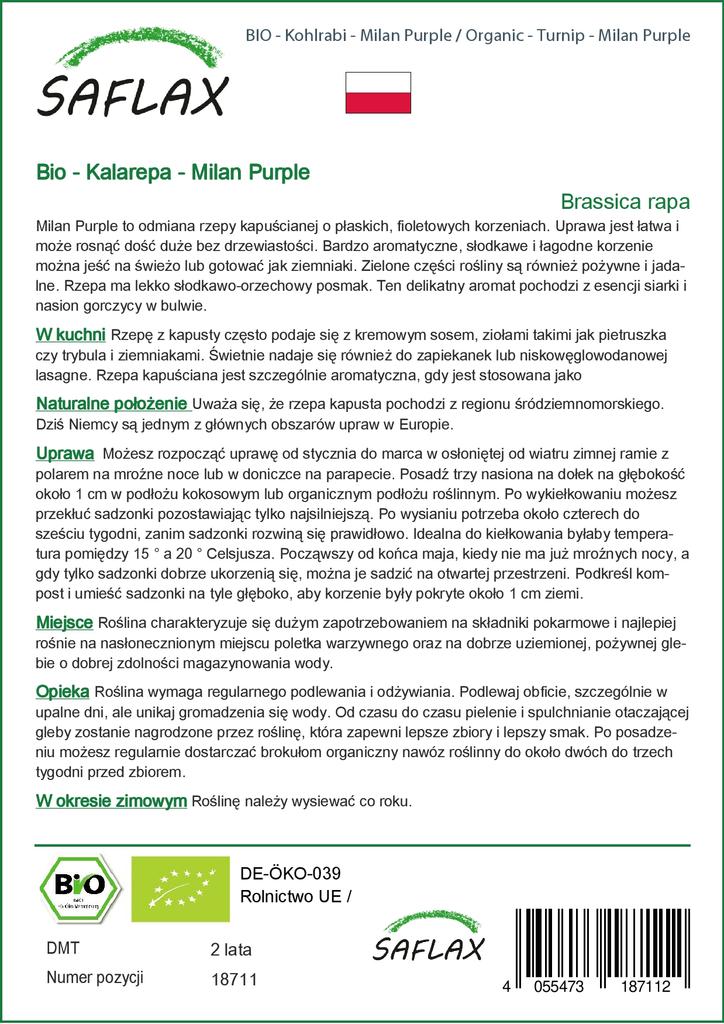
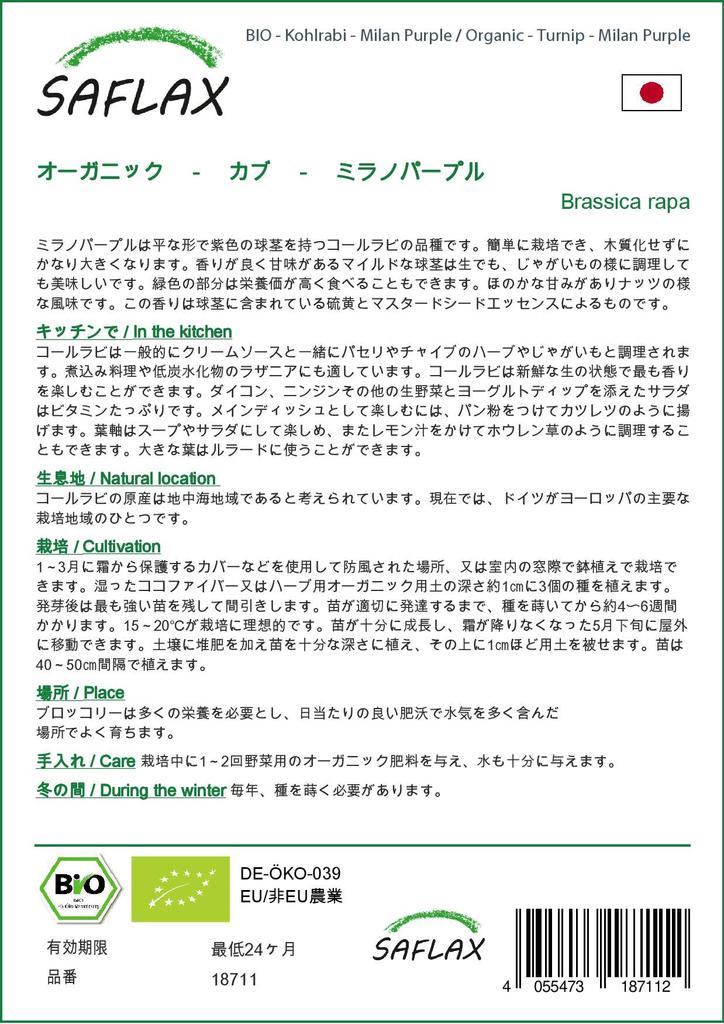
Milan Purple is a cabbage turnip variety with flat, purple-coloured roots. Its cultivation is easy and it can grow quite big without getting woody. The very aromatic, sweetish and mild roots can be eaten fresh or cooked like potatoes. The green parts of the plant are nutritious and edible as well. Turnip has a light sweetish nutty taste. This fine aroma stems from the sulphur and mustard seed essences in the tuber.
Natural Location:
The origin of cabbage turnip is believed to be the Mediterranean region. Today, Germany is one the main cultivation areas in Europe.
Cultivation:
You can start cultivation from January until March in a wind-sheltered cold frame with a fleece cover for frosty nights, or in pot on your windowsill. Plant three seeds per planting hole about 1 cm deep into coconut substrate or organic vegetable substrate. After germination, you can prick the seedlings out leaving only the strongest one. It will take about four to six weeks after seeding until the seedlings have properly developed. A temperature between 15° and 20° Celsius would be ideal for germination. Starting from the end of May, when there are no frosty nights ahead anymore, and as soon as the seedlings have developed a proper rooting, they can be planted out in the open. Provide some underlining/padding with compost and place the seedlings deep enough into the soil so that the roots are covered with about 1 cm of earth. Leave about 40 to 50 cm space between the plants.
Place:
The plant has high nutrient demand and grows best at a sunny place of the vegetable patch and in well-grounded, nutritious soil with a good water storage capacity.
Care:
The plant requires watering and nutrition regularly. Water generously, especially on hot days, but avoid water-logging. Weeding and loosening the surrounding soil from time to time will be rewarded by the plant producing a better harvest and flavour. After planting out, you may regularly provide your Broccoli with organic vegetable fertilizer until about two to three weeks before harvesting.
During the winter:
The plant should be re-seeded every year.
Picture credits:
- © About © : Contact SAFLAX - - http://www.saflax.de/copyright
- © Frank Laue - © Saflax - http://www.saflax.de/copyright
- © Frank Laue - © Saflax - http://www.saflax.de/copyright
- © About © : Contact SAFLAX - - http://www.saflax.de/copyright
- © About © : Contact SAFLAX - - http://www.saflax.de/copyright
- © About © : Contact SAFLAX - - http://www.saflax.de/copyright
- © About © : Contact SAFLAX - - http://www.saflax.de/copyright
- © About © : Contact SAFLAX - - http://www.saflax.de/copyright
- © About © : Contact SAFLAX - - http://www.saflax.de/copyright



 No-delivery refund