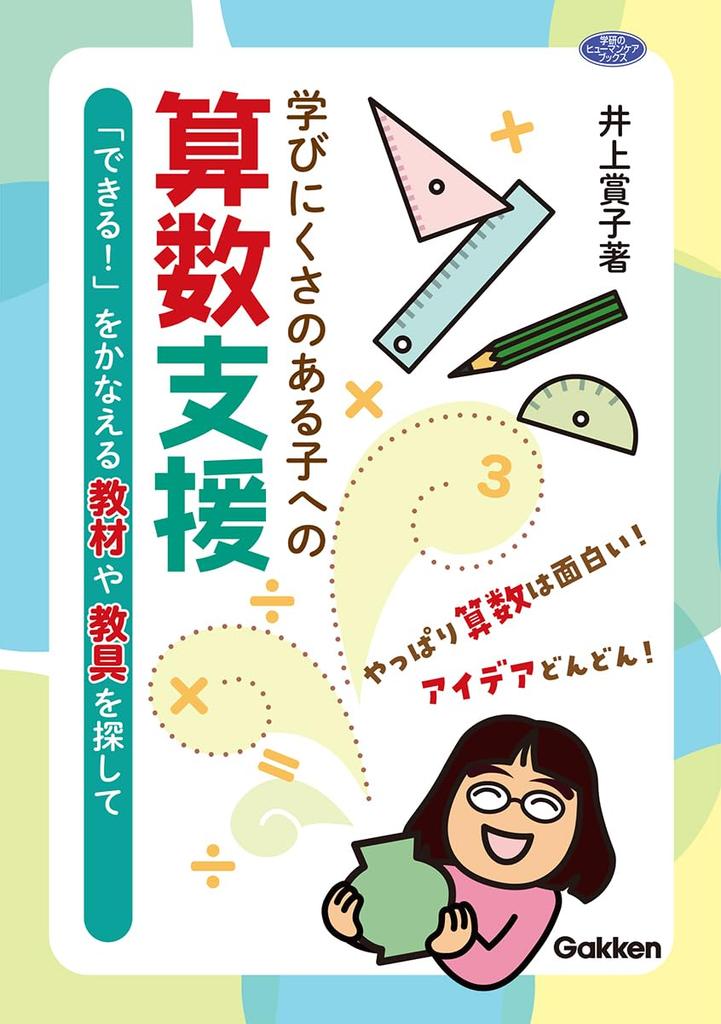
★★★Searching for Teaching Materials and Tools to Help Children Say "I Can Do It!"★★★
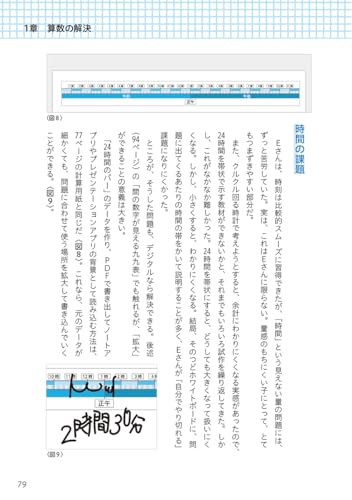
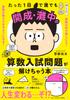
When considering support for children struggling with math, the number of teaching materials and tools tends to increase rapidly.
This is because, even if the underlying learning difficulties are the same for all children, the specific nature of math requires tailored approaches to each individual subject.
Thinking about teaching materials and tools is an endeavor to explore:
"How can I make this child learn this content more easily?"
"Why are they struggling here?"
However, it can be difficult to come up with ideas from scratch.
In such cases, this book, with its information on real-life child examples and strategies, may make it easier to consider the child in front of you.
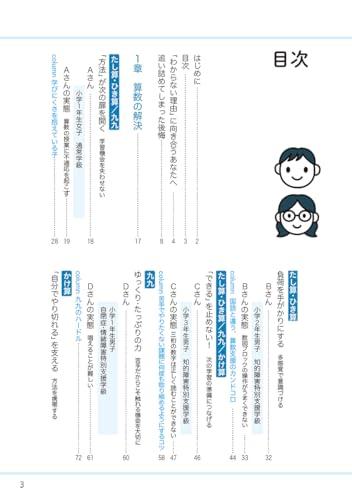
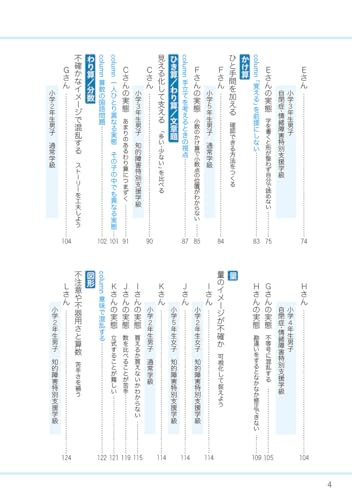
[Table of Contents] ●Chapter 1 Solving Arithmetic Problems
Addition/Subtraction/Multiplication Tables: "Methods" Open the Next Door - Don't Miss Learning Opportunities - Student A (1st Grade, Regular Class)
Addition/Subtraction: Using Load as a Clue - Raising Awareness Through Multisensory Communication - Student B (2nd Grade, Special Support Class for Students with Intellectual Disabilities)
Addition/Subtraction/Multiplication Tables: Don't Stop Them from "Doing It!" - Connecting to Preparation for the Next Learning - Student C (3rd Grade, Special Support Class for Students with Intellectual Disabilities)
Multiplication Tables: Slow and Plenty of Effort - Cherishing Opportunities to Touch Because They Are Difficult - Student D (1st Grade, Special Support Class for Students with Autism and Emotional Disabilities)
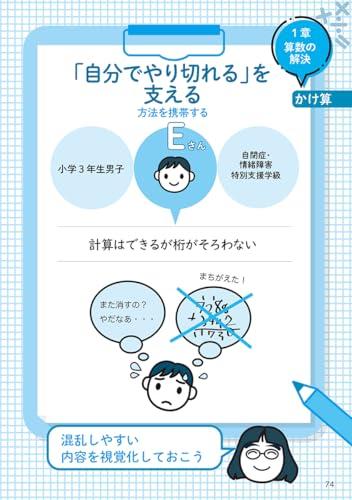
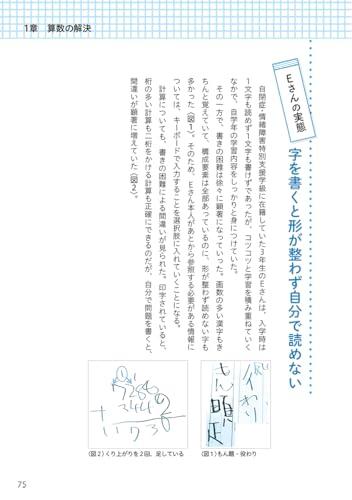
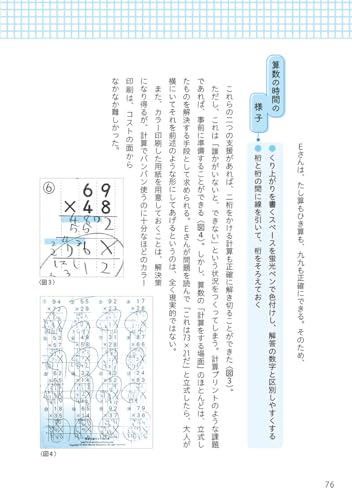
Multiplication: Supporting "Being Able to Complete It Yourself" - Carrying a Method with You - Student E (3rd Grade, Special Support Class for Students with Autism and Emotional Disabilities)
Multiplication: Adding an Extra Step - Creating a Method for Verification - Student F (5th Grade, Regular Class)
Subtraction/Division/Word Problems: Visualizing and Supporting - Comparing "More" and "Less" Student C (3rd grade, special support class for intellectual disabilities)
Division/Fractions: Confusion due to uncertain images. Let's try using stories. Student G (2nd grade, regular class)/Student H (4th grade, special support class for autism and emotional disabilities)
Quantity: Uncertain image of quantity. Let's visualize it. Student I (2nd grade, special support class for intellectual disabilities)/Student J (5th grade, special support class for intellectual disabilities)/Student K (2nd grade, regular class)
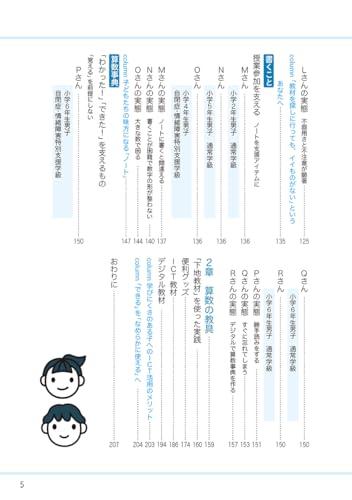
Geometry: Compensating for inattention and clumsiness with difficulties in math. Student L (2nd grade, special support class for intellectual disabilities)
Writing: Supporting participation in class. Using notebooks as a support tool. Student M (2nd grade, regular class)/Student N (5th grade, regular class)/Student O (4th grade, special support class for autism and emotional disabilities)
Math dictionary: Supporting "I got it!" and "I did it!". Don't assume "memorization". Student P (6th grade) (Special support class for students with autism/emotional disorders) / Student Q (6th grade elementary school student, regular class) / Student R (6th grade elementary school student, regular class)
●Chapter 2: Mathematics Teaching Materials
Practical application using "basic teaching materials" / Useful gadgets / ICT teaching materials / Digital teaching materials


 No-delivery refund





![A Book That Clearly Explains All the Math You Need To Know for Six Years of Elementary School [Revised Edition]](https://img.joomcdn.net/f056e247595e7eaae2481c7586781507ca76b802_68_100.jpeg)