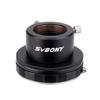
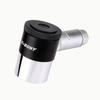
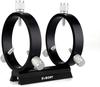
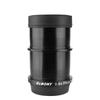
Adjustable collimator. Anyone can easily collimate 1.25" and 2" reflector telescopes. Comes with a removable 2-inch adapter. Constructed of metal materials, there is no need for tedious and time-consuming alignments.
Easy to use. Accurate collimation results in sharper images within minutes. No need to adjust again and again. Just look at the collimator from the mirror side of the scope and adjust the screws.
7 level brightness adjustment. Adjustable brightness. Suitable for different light conditions, great alignment in the dark and during the day, ensuring you get the best possible view from your reflecting telescope.
High quality sturdy metal body. For long-term use, complete instructions are included with step-by-step instructions to properly adjust the reflector telescope.
Triple cement of the lens. Improves stability, 7 brightness levels, quick alignment, much faster than manual collimators.
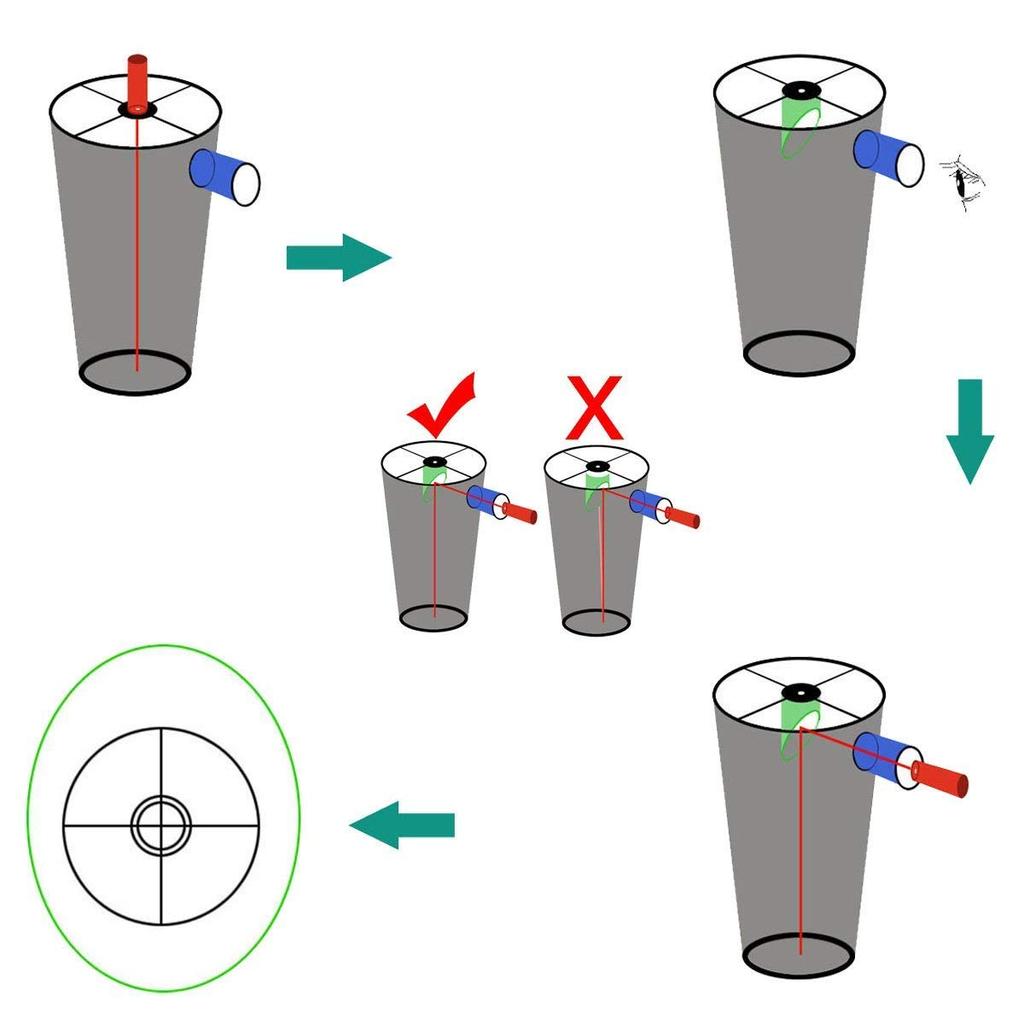
Specifications: 1. Brand: Svbony 2. Name: Collimator 3. Wavelength: 635-655nm 4. Fit Type: Newtonian and SCT Reflector Telescope 5. Color: Black 6. Body Material: Metal 7. Net Weight: 135g/4.79oz. 8. Note: The optimal working distance is 2 meters Please note: 1. Do not look directly. 2. Do not expose your skin for long periods of time as rashes and burns may occur from the beam. Package List: Reflector Telescope Collimator 2 Inch Adapter Sleeve English User Manual How to Use A collimator is a tool for adjusting the optical axis in which the pointer is attached to the center axis of an eyepiece-shaped tube so that the position and angle are exactly the same as the center axis of the tube. Since the position and orientation of the pointer is adjusted to precisely match the central axis of the eyepiece-like tube, it is possible to check whether the optical system is tilted correctly by following the light emitted from the collimator. It can be used to adjust the tilt of the secondary mirror and the primary mirror. First, adjust the tilt of the secondary mirror, and then adjust the tilt of the primary mirror. Adjust the optical axis with the optical axis adjustment eyepiece.
If it appears to be aligned, the optical axis is aligned.