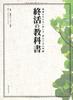
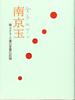
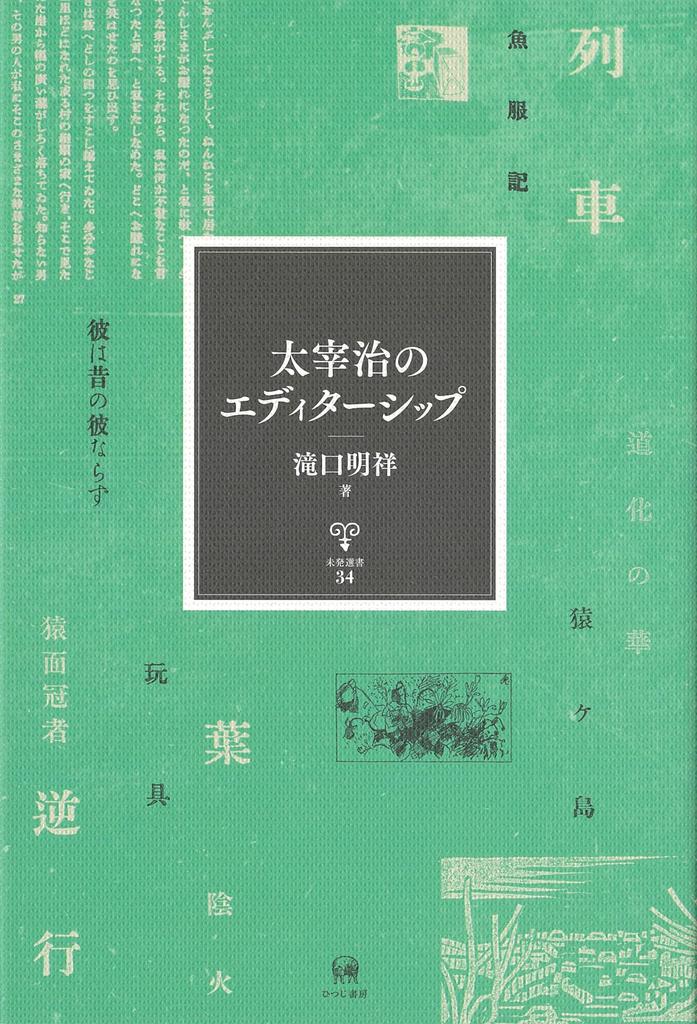
[Price: 3,600 yen plus tax] Dazai Osamu's works are made up of a montage of various quotations. By reading multiple of Dazai's works, the reader's desire is drawn to the author Dazai himself. In other words, all of Dazai Osamu's works form a montage that forms Dazai Osamu. This book explores how this system has been formed, and will also shed light on the multifaceted nature of Dazai's work.
Table of Contents
Prologue: Dazai Osamu's Editorship
I. Quotations/Fragments
Chapter 1: Success and "Massage" - "Omoide"
1. Reading "Omoide" Historically
2. Changing "Hometown" and Family
3. Sexuality and Subjectivation
4. Signs of Deviance and the Search for "Truth"
5. Tracing Back to "Mother"
Chapter 2: Fragments and Montage, or the Allegorization of Modernity - "One Hundred Views of Mount Fuji"
1. The Art of Seeing
2. The Desire for a New "Realism"
3. Mount Fuji as Allegory
4. The "Nomadic Space" of Film
5. Floating Fragments To
Chapter 3: How a Girl's "Private Chat" Became Print
- "Ariake Yoshiko's Diary" and "Female Student"
1. The Diary That Inspired "Female Student"
2. Toyoda Masako's "Spelling Class" and "Fujin Koron"
3. "Female Student" and "Female Factory Worker"
4. The Discourse of "Delinquent Female Student"
5. "Fact" and Fiction
6. "Private Chat" During Wartime
Chapter 4: Letters from Readers/Letters from the Author - Focusing on "Suisen"
1. Dazai Osamu and "Letters"
2. "I" as "Loyal"
3. Delivering "Truth"
4. Letters and Written Communication
5. Paintings of Suisen
II. War
Chapter 5: The Problem of Faith in Wartime: Dazai Osamu and War
1. Believing - Being Believable - Relationship
2. Faith as Beyond Subjectivity - Transcendence
3. Between Faith and Distrust
Chapter 6: Prohibition and Encouragement - "Mitsunori Sanetomo"
1. Surface/Deep
2. Prohibition/Encouragement
3. Rumors and Censorship During Wartime
4. Intention and Meaning
Chapter 7: A Journey Through the Nation - "Tsugaru"
1. "Hometown" and the Traveler
2. Breaking Away from "Adult" = "City Dweller"
3. Landscape Theory
4. "A Calm and Windless Atmosphere"
III. Man/Woman
Chapter 8: Comical A Story of Men - "Pandora's Box"
1. The Stormy Night Scene
2. Words Addressed to "You"
3. The "New Man" and Women
4. Woman as the Other
Chapter 9: Writing and Revolution - "The Setting Sun"
1. The Repetition of "Ah."
2. The Intersection of Writing and Reading
3. "Twilight" and "Morning"
4. The Transformation of "I"
Chapter 10: "Self-Portrait" and the Gaze of Others - "No Longer Human"
Introduction
1. Dazai Osamu and Ōba Yozo
2. Aspects of Quotation
3. "Man" and "Woman"
4. The Continual Rereading of "No Longer Human"
List of First Appearances


 Återbetalning vid utebliven leverans