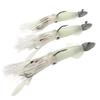
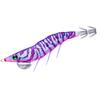
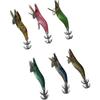
① Selecting a natural color with clear water
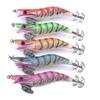
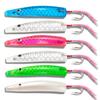
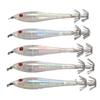
In areas with high water clarity, natural green and blue colors are effective. They help to disarm squid and appeal to them with a natural silhouette. This is especially suitable for sight fishing during the daytime.
② Utilizing appealing colors in muddy water
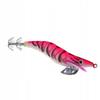
In murky water, appealing colors such as pink and orange enhance visibility, making them more likely to catch squid's eye and thus increasing their attractiveness. Combining these with subtle wave action in murky water or at night can double your catch.
③ The advantage of luminous and UV-resistant colors at night and in deep water.
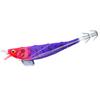
For night fishing and deep-range fishing, luminous squid jigs made of phosphorescent material or those with UV colors emit light, creating a strong appeal to less active squid. They are particularly effective when used with a slow retrieve during slack tide.
④ Color rotation during twilight and tidal changes
During dawn and dusk, and when the tide changes, it's important to alternate between natural and attention-grabbing colors to gauge the squid's reaction. The time when the tide starts to pick up is especially a great opportunity for a big catch.
⑤ Color strategies for squid jigs adapted to water depth and currents
In shallow waters, translucent colors are advantageous, while in deeper waters, glow-in-the-dark or metallic colors are best. Considering the turbidity of the water and the amount of light, frequently switching between different jigs is key to increasing your catch. Combining them with a dropper is especially effective for targeting different depths.
⑥ Eging methods tailored to the target species
The size, color, and sinking speed of the squid jig are adjusted for each target species, such as bigfin reef squid, cuttlefish, squirrel squid, swordtip squid, spear squid, and Japanese flying squid. By carefully observing the currents and water temperature changes, you can increase your chances of a successful catch.
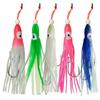
⑦ A highly versatile squid jig that can also be used for octopus fishing.
Its unique wave design induces reaction bites from octopuses. Suitable for both boat and shore octopus fishing, it's a versatile lure that targets a wide variety of octopuses. The swaying action during the fall delivers the expected movement.
⑧ High-performance design compatible with multiple rigs
It can be used for squid metal rigs, omorig rigs, bottom rigs, and as a dropper. The setting can be adjusted according to the current and fishing spot, maximizing your catch. Slow lift and fall techniques also yield good results.
⑨ Hybrid design of float and sinking
Designed for both floating and lead jigs, this lure adapts to different currents and depths. Its emphasis on maintaining a horizontal posture during pauses allows squid to bite for extended periods, making it ideal for natural drift strategies.
⑩ Conquer with a set of 10 proven squid jigs
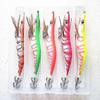
Through meticulous adjustment of underwater posture and fall speed, it can handle both highly active and low-activity conditions. It delivers consistent catches in both night and daytime fishing. A model supervised by professional anglers.
Mastering squid jigging with metal jigs
How to use, recommended fishing spots, and target species by season: For eging enthusiasts, "Ika Metal" is an attractive fishing method that is easy to start and offers the potential for high catch rates.
Unlike traditional shore fishing with squid jigs, this method uses metal jigs and is effective in deep waters and night fishing.
This article explains the basics of squid metal fishing, recommended fishing spots, and the types of squid that can be caught in each season.
What is Ika Metal? Ika Metal is a fishing method that uses a special "metal jig" to target squid from a boat.
It is particularly effective for night fishing, targeting squid that are attracted to lights.
To detect even the slightest bite, a specialized rod and reel are essential.
Basic operation of squid metal
How to choose a metal squid jig
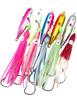
Color: For night fishing, glow-in-the-dark types are effective.
Weight: Choose between 20g and 60g depending on the water current and fishing location.
Basic fishing techniques
Sink the squid jig and gently jerk it to attract attention.
After the jerk, keep the line neither taut nor slack, and wait for a bite.
How to detect a bite
If you feel a slight discomfort or "uncomfort," gently adjust.
Recommended squid metal fishing spots
Fukui Prefecture (Wakasa Bay): Abundant Japanese flying squid (kensaki squid) from summer to autumn.
Ishikawa Prefecture (Noto Peninsula): Good spots for catching bigfin reef squid and Japanese flying squid.
Hyogo Prefecture (Awaji Island): Ideal for targeting bigfin reef squid.
Kyushu (Nagasaki and Kagoshima): You can also enjoy spear squid in winter.
Squid that can be targeted in different seasons
Spring (March-May): Large bigfin reef squid
Summer (June-August): The peak season for Japanese flying squid (Kensaki squid).
Autumn (September-November): Catching large numbers of mature bigfin reef squid.
Winter (December-February): Targeting spear squid in deep waters
The appeal of squid metal
Squid metal fishing is a type of fishing that is easy for beginners to start and offers the potential for high catch rates.
While it's easy to use and enjoyable, it also offers the depth to detect even the most subtle bites, making it incredibly addictive once you try it.
The fantastical scenery that can only be seen while night fishing is also one of its attractions.
Take this opportunity to experience squid metal fishing and discover a new way to enjoy eging (squid fishing).
![Lure for natural suitable for low activity slow daytime fishing squid, metal, finish, squid, action, [product]](https://img.joomcdn.net/46a3e7d1a8214b1520088ce1f5c0ee714a3b6f49_914_1024.jpeg)
![Lure for natural suitable for low activity slow daytime fishing squid, metal, finish, squid, action, [product]](https://img.joomcdn.net/a3438e9dfc6b361693c331a732bd4d8720713860_768_1024.jpeg)
![Lure for natural suitable for low activity slow daytime fishing squid, metal, finish, squid, action, [product]](https://img.joomcdn.net/443b4df3d4600a5163557fa12ee5dd94d818e4d2_1024_1024.jpeg)
![Lure for natural suitable for low activity slow daytime fishing squid, metal, finish, squid, action, [product]](https://img.joomcdn.net/7f5d0ce8707e8009826918017a3f153ad1fed956_1024_956.jpeg)
![Lure for natural suitable for low activity slow daytime fishing squid, metal, finish, squid, action, [product]](https://img.joomcdn.net/9b7a942cbd5fcdf0088698e3aa9df604bb166932_978_1024.jpeg)


 Återbetalning vid utebliven leverans


![DUEL Bläckfisklockbete LQ (Tydlig lins Tyginslag) [Eging Fiskeutrustning Fiskeutrustning Beten Egi Rigg Storfenad Revbläckfisk]](https://img.joomcdn.net/b1934cb3d196f62afddea84a7bd25ad821b80d6d_100_100.jpeg)

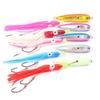
![East Leaf Eging Luminous Squid Jigs, Size 3.0, Set of 10, with Clear Case and Storage Pouch [Easy To Check Color At a Glance and Easy To Carry]](https://img.joomcdn.net/ad3b8265c113aa107aaa894a5209b31fd4b1e813_100_100.jpeg)